
 Reference range:

Bartonella henselae IgG checks your blood for IgG antibodies against B. henselae, the bacterium most often responsible for cat-scratch disease (CSD). IgG usually reflects past exposure; rising or very high IgG levels can also be seen during active infection. Labs typically use an IFA (indirect immunofluorescence assay) and report results as titers (e.g., 1:64, 1:128, 1:256). Exact cutoffs vary by lab.
When is the Bartonella henselae IgG test is ordered
Your clinician may order Bartonella IgG if you have symptoms compatible with cat-scratch disease (tender, enlarged lymph nodes after a cat scratch or bite), if you have certain eye problems (like neuroretinitis), culture-negative endocarditis, or if you’re immunocompromised. CSD often starts with a small bump or blister at the scratch site, then lymph nodes swell 1–3 weeks later.
What the test can and can’t tell you
Can:
-
Support a diagnosis of Bartonella infection when your history and exam fit.
-
Show prior exposure or, with paired tests, show a rising titer consistent with a recent infection.
Can’t:
-
Pinpoint timing of infection from a single positive result (IgG may persist long after you feel better).
-
Identify the exact Bartonella species (there’s cross-reactivity among species).
-
Rule out disease in every case—some patients with typical CSD can have negative or low antibodies early on. CDC+1
IgG vs IgM vs PCR—what’s the difference?
-
IgG: Rises weeks after exposure; may remain detectable long-term. Helpful for past exposure and, with paired testing, for recent infection.
-
IgM: More suggestive of recent/acute infection when positive, but may be transient and is not always detected.
-
PCR (molecular testing): Looks for bacterial DNA in a sample (e.g., lymph node aspirate). Useful in select cases, but blood PCR has limited sensitivity, and lymph node aspiration is not routinely done unless diagnosis is unclear or to relieve significant pain.
Typical symptoms & course (why your doctor ordered this)
-
Small bump/papule at the scratch or bite, often 3–10 days after exposure.
-
Tender, enlarged lymph nodes near the area 1–3 weeks later; fever and fatigue are common.
-
Most immunocompetent people recover without complications; special forms (eye disease, liver/spleen involvement, endocarditis) need targeted care.
Common reasons results seem confusing
-
Different lab cutoffs. One lab’s “positive” may be another’s “equivocal.” Always use your report’s ranges.
-
Past exposure. IgG can stay positive for years, even after successful treatment, so context matters.
-
Cross-reactivity. Antibodies may react with other Bartonella species; serology doesn’t cleanly distinguish them.
What to do next
If your IgG is negative but you have classic symptoms:
-
Talk to your clinician about retesting in a couple of weeks or adding IgM and/or PCR (especially if diagnosis is uncertain).
If your IgG is equivocal:
-
Plan a repeat IgG in 10–14 days to look for a rising titer. Your provider may add IgM or other tests.
If your IgG is positive:
-
Discuss your symptoms and timing with your clinician. A single positive may reflect past exposure; paired testing or clinical findings help determine if it’s active.
-
Treatment decisions depend on your situation (symptom severity, immune status, location of disease). Many uncomplicated cases in healthy people improve without complications; antibiotics are sometimes used—your clinician will advise. NCBI
If you’re immunocompromised (e.g., advanced HIV, chemotherapy):
-
Seek care promptly—bartonellosis can be more severe and may require specific antibiotic therapy and closer follow-up.
Reducing your risk (cat-related practical tips)
You do not need to test or treat a healthy cat. Lower risk by keeping cats indoors when possible, avoiding scratches/bites, washing any scratches promptly, and using flea control for pets.
Key takeaways
-
Bartonella henselae IgG helps show prior exposure and, with paired tests, may support recent infection.
-
A single positive doesn’t prove active disease; clinical context is essential.
-
Equivocal results usually call for repeat testing.
-
When needed, IgM and PCR can add information, but each has limits.
Lab Results Explained and Tracked
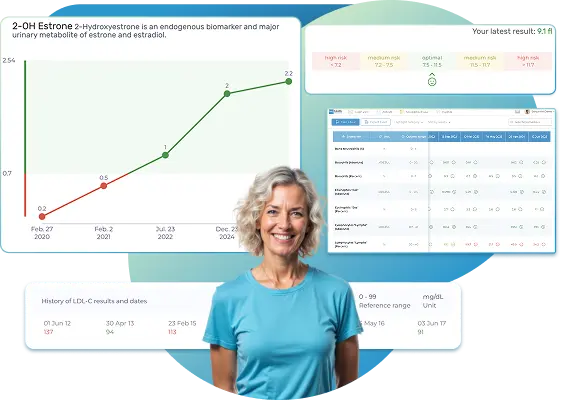
All Your Lab Results.
One Simple Dashboard.
Import, Track, and Share Your Lab Results Easily
Import, Track, and Share Your Lab Results
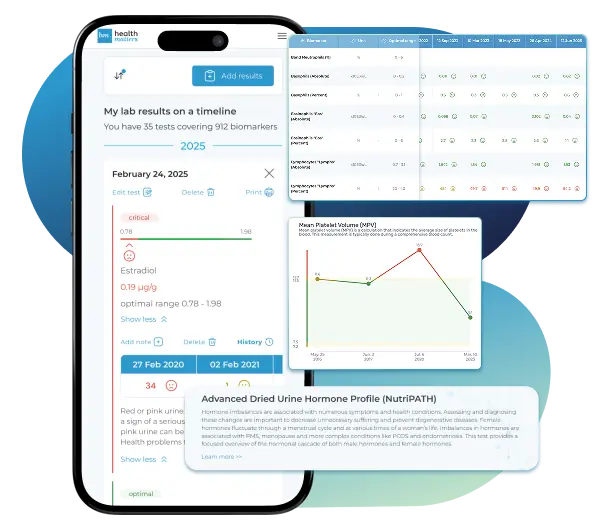
Import lab results from multiple providers, track changes over time, customize your reference ranges, and get clear explanations for each result. Everything is stored securely, exportable in one organized file, and shareable with your doctor—or anyone you choose.
Cancel or upgrade anytime
Article Review & Sources
All our content is backed by peer-reviewed studies, academic research, and trusted medical sources. We're committed to accuracy and transparency — see our editorial policy for details.
Laboratories
Bring All Your Lab Results Together — In One Place
We accept reports from any lab, so you can easily collect and organize all your health information in one secure spot.











Pricing Table
Gather Your Lab History — and Finally Make Sense of It
Finally, Your Lab Results Organized and Clear

Personal plans

$79/ year
Advanced Plan
Access your lab reports, explanations, and tracking tools.
- Import lab results from any provider
- Track all results with visual tools
- Customize your reference ranges
- Export your full lab history anytime
- Share results securely with anyone
- Receive 5 reports entered for you
- Cancel or upgrade anytime
$250/ once
Unlimited Account
Pay once, access everything—no monthly fees, no limits.
- Import lab results from any provider
- Track all results with visual tools
- Customize your reference ranges
- Export your full lab history anytime
- Share results securely with anyone
- Receive 10 reports entered for you
- No subscriptions. No extra fees.
$45/ month
Pro Monthly
Designed for professionals managing their clients' lab reports
- Import lab results from any provider
- Track lab results for multiple clients
- Customize reference ranges per client
- Export lab histories and reports
- Begin with first report entered by us
- Cancel or upgrade anytime
About membership
What's included in a Healthmatters membership
 Import Lab Results from Any Source
 See Your Health Timeline
 Understand What Your Results Mean

 Visualize Your Results

 Data Entry Service for Your Reports
 Securely Share With Anyone You Trust
Let Your Lab Results Tell the Full Story
Once your results are in one place, see the bigger picture — track trends over time, compare data side by side, export your full history, and share securely with anyone you trust.




Bring all your results together to compare, track progress, export your history, and share securely.
What Healthmatters Members Are Saying

I have been using Healthmatters.io since 2021. I travel all over the world and use different doctors and health facilities. This site has allowed me to consolidate all my various test results over 14 years in one place. And every doctor that I show this to has been impressed. Because with any health professional I talk to, I can pull up historical results in seconds. It is invaluable. Even going back to the same doctor, they usually do not have the historical results from their facility in a graph format. That has been very helpful.
Anthony
Unlimited Plan Member since 2021
What fantastic service and great, easy-to-follow layouts! I love your website; it makes it so helpful to see patterns in my health data. It's truly a pleasure to use. I only wish the NHS was as organized and quick as Healthmatters.io. You've set a new standard for health tracking!
Karin
Advanced Plan Member since 2020
As a PRO member and medical practitioner, Healthmatters.io has been an invaluable tool for tracking my clients' data. The layout is intuitive, making it easy to monitor trends and spot patterns over time. The ability to customize reports and charts helps me present information clearly to my clients, improving communication and outcomes. It's streamlined my workflow, saving me time and providing insights at a glance. Highly recommended for any practitioner looking for a comprehensive and user-friendly solution to track patient labs!
Paul
Healthmatters Pro Member since 2024

We implement proven measures to keep your data safe.
At HealthMatters, we're committed to maintaining the security and confidentiality of your personal information. We've put industry-leading security standards in place to help protect against the loss, misuse, or alteration of the information under our control. We use procedural, physical, and electronic security methods designed to prevent unauthorized people from getting access to this information. Our internal code of conduct adds additional privacy protection. All data is backed up multiple times a day and encrypted using SSL certificates. See our Privacy Policy for more details.