Optimal Result:
0 - 2 umol/L.
Optimal Result:
0 - 2 umol/L.

Amino Acid Analysis, Plasma - Amino Acid analysis is necessary for the diagnosis of a variety of inborn errors of metabolism. These include, but are not limited to, phenylketonuria, tyrosinemia, citrullinemia, non-ketotic hyperglycinemia, maple syrup urine disease, and homocystinuria. The assay is also key for the continued monitoring of treatment plans for these disorders and useful for assessing nutritional status of patients.
Alpha-aminoadipic acid (a-Aminoadipic acid) is an intermediary metabolite of lysine (primarily) and of tryptophan.
Alpha-aminoadipic acid also is a metabolite of yeast/fungi metabolism, and anecdotal evidence supports occasional increases with intestinal dysbiosis as a source.
In Reye’s syndrome, alpha-aminoadipic hyperaminoaciduria occurs together with hyperlysinuria. Rare metabolic and acute alpha-aminoadipic hyperaminoaciduria is documented as due to a hereditary defect in the Alpha-aminoadipic acid transaminase enzyme and in the next enzyme in the sequence, alpha-ketoadipic acid dehydrogenase.
In glutaric acidemia/aciduria there can be notable alpha-aminoadipic hyper-aminoaciduria due to a hereditary weakness of glutaryl CoA dehydrogenase. Riboflavin insufficiency as FAD may provoke or worsen alpha-aminoadipic hyperaminoaciduria (and glutaric acidosis) if the dehydrogenase enzymes are weak, but riboflavin may or may not improve the kinetics of defective dehydrogenases.
Lab Results Explained and Tracked
What does it mean if your Alpha Aminoadipic Acid result is too high?
Elevated levels of Alpha Aminoadipic Acid in plasma may be associated with certain inborn errors of amino acid metabolism. These metabolic disorders are caused by genetic defects that affect the synthesis, catabolism, or transport of amino acids, leading to a diverse class of diseases.
Inborn errors of amino acid metabolism can manifest in various ways and have different clinical presentations. For example, some well-known disorders in this category include Phenylketonuria (PKU), Lysinuric Protein Intolerance (LPI), and Homocystinuria due to Cystathionine Beta-Synthase (CBS) deficiency. Each of these conditions has distinct pathophysiological features and clinical implications.
- Phenylketonuria is characterized by defects in phenylalanine hydroxylase, leading to the accumulation of phenylalanine.
- Lysinuric Protein Intolerance results from defects in the transport of certain amino acids, leading to malabsorption and secondary urea cycle defects.
- Homocystinuria is caused by a defect in cystathionine β-synthase, leading to the accumulation of methionine and homocysteine.
It's important to note that while these conditions are examples of inborn errors of amino acid metabolism, they may not be directly related to elevated Alpha Aminoadipic Acid levels. The specific link between such elevated levels and particular metabolic disorders would require further clinical investigation and correlation with other clinical findings.
Elevated levels of Alpha-Aminoadipic Acid in plasma can also be caused by various conditions, including vitamin B6 insufficiency or pyridoxal 5-phosphate dysfunction. Vitamin B6 is crucial for transaminase enzymes, which convert one amino acid to another and help them enter the Krebs cycle. Therefore, a deficiency in vitamin B6 can lead to an accumulation of Alpha-Aminoadipic Acid.
A potential treatment approach for elevated Alpha-Aminoadipic Acid levels involves supplementing with vitamin B6 and α-KG (alpha-Ketoglutarate). This supplementation aims to facilitate the transamination conversion of Alpha-Aminoadipic Acid to Alpha-Ketoadipic Acid. However, it's important to note that the effectiveness and appropriateness of this treatment can vary depending on the underlying cause and individual health circumstances.
Additionally, there are instances, such as in Pyridoxine-Dependent Epilepsy (PDE), where patients are already on daily pyridoxine supplements. In such cases, treatment approaches can be more complex and tailored to the specific disorder and patient needs.
Given the complexity and potential variability in underlying causes, it's essential to consult a healthcare provider for an accurate diagnosis and appropriate treatment plan tailored to the individual's specific condition and overall health profile.

All Your Lab Results.
One Simple Dashboard.
Import, Track, and Share Your Lab Results Easily
Import, Track, and Share Your Lab Results
Import lab results from multiple providers, track changes over time, customize your reference ranges, and get clear explanations for each result. Everything is stored securely, exportable in one organized file, and shareable with your doctor—or anyone you choose.
Cancel or upgrade anytime
Article Review & Sources
All our content is backed by peer-reviewed studies, academic research, and trusted medical sources. We're committed to accuracy and transparency — see our editorial policy for details.
Laboratories
Bring All Your Lab Results Together — In One Place
We accept reports from any lab, so you can easily collect and organize all your health information in one secure spot.











Pricing Table
Gather Your Lab History — and Finally Make Sense of It
Finally, Your Lab Results Organized and Clear

Personal plans

$79/ year
Advanced Plan
Access your lab reports, explanations, and tracking tools.
- Import lab results from any provider
- Track all results with visual tools
- Customize your reference ranges
- Export your full lab history anytime
- Share results securely with anyone
- Receive 5 reports entered for you
- Cancel or upgrade anytime
$250/ once
Unlimited Account
Pay once, access everything—no monthly fees, no limits.
- Import lab results from any provider
- Track all results with visual tools
- Customize your reference ranges
- Export your full lab history anytime
- Share results securely with anyone
- Receive 10 reports entered for you
- No subscriptions. No extra fees.
$45/ month
Pro Monthly
Designed for professionals managing their clients' lab reports
- Import lab results from any provider
- Track lab results for multiple clients
- Customize reference ranges per client
- Export lab histories and reports
- Begin with first report entered by us
- Cancel or upgrade anytime
About membership
What's included in a Healthmatters membership
 Import Lab Results from Any Source
 See Your Health Timeline
 Understand What Your Results Mean

 Visualize Your Results

 Data Entry Service for Your Reports
 Securely Share With Anyone You Trust
Let Your Lab Results Tell the Full Story
Once your results are in one place, see the bigger picture — track trends over time, compare data side by side, export your full history, and share securely with anyone you trust.




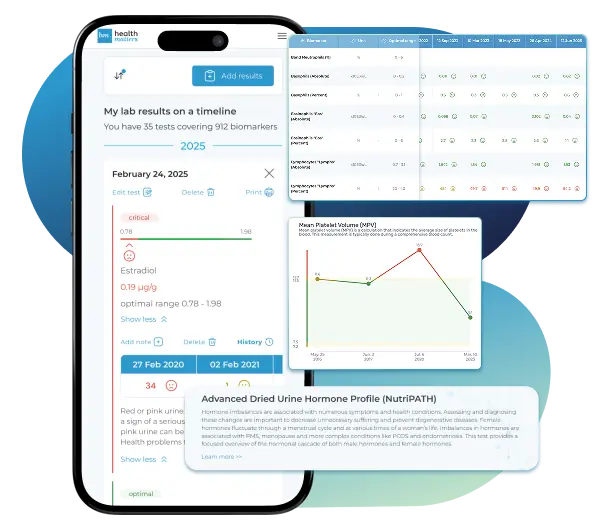
Bring all your results together to compare, track progress, export your history, and share securely.
What Healthmatters Members Are Saying

I have been using Healthmatters.io since 2021. I travel all over the world and use different doctors and health facilities. This site has allowed me to consolidate all my various test results over 14 years in one place. And every doctor that I show this to has been impressed. Because with any health professional I talk to, I can pull up historical results in seconds. It is invaluable. Even going back to the same doctor, they usually do not have the historical results from their facility in a graph format. That has been very helpful.
Anthony
Unlimited Plan Member since 2021
What fantastic service and great, easy-to-follow layouts! I love your website; it makes it so helpful to see patterns in my health data. It's truly a pleasure to use. I only wish the NHS was as organized and quick as Healthmatters.io. You've set a new standard for health tracking!
Karin
Advanced Plan Member since 2020
As a PRO member and medical practitioner, Healthmatters.io has been an invaluable tool for tracking my clients' data. The layout is intuitive, making it easy to monitor trends and spot patterns over time. The ability to customize reports and charts helps me present information clearly to my clients, improving communication and outcomes. It's streamlined my workflow, saving me time and providing insights at a glance. Highly recommended for any practitioner looking for a comprehensive and user-friendly solution to track patient labs!
Paul
Healthmatters Pro Member since 2024

We implement proven measures to keep your data safe.
At HealthMatters, we're committed to maintaining the security and confidentiality of your personal information. We've put industry-leading security standards in place to help protect against the loss, misuse, or alteration of the information under our control. We use procedural, physical, and electronic security methods designed to prevent unauthorized people from getting access to this information. Our internal code of conduct adds additional privacy protection. All data is backed up multiple times a day and encrypted using SSL certificates. See our Privacy Policy for more details.