Alk Phosphatase, Bone Specific
Other names: Bone-Specific Alkaline Phosphatase, BAP
 Optimal Result:
6 - 22.7 ug/L.
Optimal Result:
6 - 22.7 ug/L.

Alk Phosphatase, Bone Specific (Bone-Specific Alkaline Phosphatase or BAP)
What Is Bone-Specific Alkaline Phosphatase?
Bone-specific alkaline phosphatase (BAP or BSAP) is an enzyme produced primarily by osteoblasts, the cells responsible for building new bone. It is a specific isoenzyme of the broader alkaline phosphatase (ALP) family, which includes enzymes from the liver, intestines, kidneys, and placenta.
Unlike total ALP, which reflects contributions from various organs, BAP directly reflects bone metabolism. Measuring BAP levels in the blood provides a more accurate picture of bone turnover, which is critical in diagnosing and monitoring bone-related conditions.
Why Is This Test Important?
The Bone-Specific Alk Phosphatase test is used to:
-
Detect abnormal bone turnover
-
Monitor bone growth or bone loss
-
Help diagnose and manage metabolic bone diseases
-
Assess the effectiveness of osteoporosis treatment
-
Differentiate between bone- and liver-related causes of elevated total ALP
Since liver and bone ALP isoenzymes can overlap in standard testing, measuring bone-specific ALP provides more diagnostic clarity—especially when liver function tests are normal but ALP is elevated.
Conditions Associated With Elevated Bone-Specific ALP
Elevated BAP levels typically indicate increased osteoblastic activity, meaning the body is actively building or remodeling bone. This can occur in:
Normal Growth and Healing
-
Childhood and adolescence (due to rapid bone growth)
-
Healing from fractures
-
Recovery from orthopedic surgery
Metabolic Bone Diseases
-
Paget’s disease of bone: abnormal bone remodeling and enlargement
-
Osteomalacia/rickets: soft or weakened bones due to vitamin D deficiency
-
Hyperparathyroidism: excess parathyroid hormone increases bone resorption
-
Renal osteodystrophy: bone changes caused by chronic kidney disease
Osteoporosis
-
Especially in postmenopausal women or individuals receiving antiresorptive or anabolic therapy (e.g., bisphosphonates or teriparatide)
-
BAP helps track treatment response and bone turnover rate
Bone Cancer or Metastasis
-
Certain cancers (e.g., breast, prostate) that spread to the bone may stimulate abnormal bone activity and raise BAP levels.
What Does a Low BAP Level Mean?
Low levels of BAP are less common but may suggest:
-
Hypophosphatasia: a rare genetic condition affecting bone mineralization
-
Severe malnutrition or zinc/magnesium deficiency
-
Hypothyroidism, in some cases
Who Should Get Tested?
Your doctor may recommend this test if you:
-
Have unexplained bone pain, deformities, or fractures
-
Are being evaluated for osteoporosis or Paget’s disease
-
Have an elevated total ALP but normal liver function tests
-
Are undergoing treatment for bone disease and need to track changes
-
Have a history of cancer with potential bone involvement
How Is the Test Performed?
-
Sample type: Blood (serum or plasma)
-
Preparation: No special fasting required, but let your provider know about any medications or supplements you take.
-
Often performed alongside other tests: calcium, phosphate, vitamin D, PTH, and total ALP
Interpreting Results in Women: Pre- vs. Postmenopausal
Hormonal status—particularly estrogen levels—has a major influence on bone metabolism and BAP levels. That’s why menopausal status is important when interpreting test results in women.
Typical Reference Ranges
(Values may vary by lab and reporting units)
| Group | Bone-Specific ALP (µg/L or ng/mL) |
|---|---|
| Premenopausal women | ~5.0 – 22.0 µg/L |
| Postmenopausal women | ~7.0 – 30.0 µg/L |
Note: Some labs report BAP in U/L or IU/L. Always check lab-specific reference ranges.
Clinical Context for Interpretation
Premenopausal Women
-
Stable estrogen levels help maintain balanced bone remodeling.
-
BAP levels tend to be low to mid-normal unless there's an issue such as:
-
Osteomalacia
-
Vitamin D deficiency
-
Early-onset osteoporosis
-
Postmenopausal Women
-
Loss of estrogen leads to increased bone resorption, triggering higher osteoblast activity.
-
BAP levels are often elevated, especially during the first 5–10 years after menopause.
-
Persistently high levels may suggest:
-
High-turnover osteoporosis
-
Paget’s disease
-
Suboptimal response to antiresorptive treatments
-
Monitoring Treatment in Osteoporosis
BAP is a useful marker to track therapy outcomes in osteoporosis:
-
Antiresorptive drugs (e.g., bisphosphonates, denosumab) typically lower BAP over time.
-
Anabolic treatments (e.g., teriparatide) may initially raise BAP, reflecting stimulated bone formation.
-
A ≥25% change from baseline BAP is considered clinically meaningful during treatment monitoring.
Key Takeaways for Menopausal Women
-
Elevated BAP post-menopause is common but should be evaluated in context—especially if there's high fracture risk or declining bone density.
-
Low BAP in osteoporosis may indicate low-turnover bone disease, which can influence treatment choices.
-
Always consider BAP results alongside DEXA scans, vitamin D levels, PTH, and clinical history.
Summary
Bone-Specific Alkaline Phosphatase (BAP) is a vital marker for assessing bone formation and turnover, especially in women navigating menopause, individuals with bone diseases, and patients undergoing osteoporosis treatment. Unlike total ALP, BAP gives a clearer, bone-focused view of osteoblastic activity—supporting better diagnosis, monitoring, and treatment planning for a wide range of skeletal health conditions.
Lab Results Explained and Tracked
What does it mean if your Alk Phosphatase, Bone Specific result is too high?
Elevated Alk Phosphatase, Bone Specific — What Does It Mean?
Overview
An elevated bone-specific alkaline phosphatase (BAP) level means that your body is experiencing increased bone formation activity, often due to active bone remodeling. This result reflects elevated activity of osteoblasts, the cells that build bone. While this can be a normal part of growth or healing, in adults—especially postmenopausal women—it may signal an underlying bone or metabolic condition that requires further evaluation.
What Causes Elevated BAP?
1. Normal Growth or Healing
-
Children and adolescents naturally have higher BAP levels due to rapid bone growth.
-
Healing fractures or post-surgical bone recovery can also cause temporary elevation in people of any age.
2. Osteoporosis (Especially Postmenopausal)
-
In postmenopausal women, declining estrogen levels lead to increased bone resorption. Osteoblasts respond by trying to rebuild bone, which raises BAP levels.
-
Elevated BAP in this context may suggest high-turnover osteoporosis and is often monitored to:
-
Assess fracture risk
-
Track treatment response to medications like bisphosphonates, denosumab, or teriparatide
-
3. Paget’s Disease of Bone
-
A chronic condition where bones break down and rebuild excessively and abnormally.
-
BAP is often markedly elevated, making it a key diagnostic marker.
4. Osteomalacia or Rickets
-
These conditions involve softening or weakening of bone due to vitamin D deficiency, calcium/phosphate imbalance, or kidney issues.
-
BAP levels rise as the body attempts to mineralize weakened bone.
5. Hyperparathyroidism
-
An overactive parathyroid gland increases bone turnover.
-
BAP may be elevated along with calcium and parathyroid hormone (PTH) levels.
6. Bone Metastasis or Primary Bone Tumors
-
Some cancers (e.g., breast, prostate) can spread to bone and stimulate abnormal bone remodeling.
-
Elevated BAP in a patient with known cancer may prompt imaging to assess for bone involvement.
7. Chronic Kidney Disease (Renal Osteodystrophy)
-
In advanced kidney disease, impaired calcium-phosphate balance alters bone metabolism, raising BAP levels.
Symptoms That May Accompany Elevated BAP
Elevated BAP itself doesn’t cause symptoms, but underlying conditions may include:
-
Bone pain or tenderness
-
Increased fracture risk
-
Skeletal deformities (in Paget’s disease)
-
Muscle weakness or fatigue
-
Numbness or tingling (if related to calcium imbalance)
-
Elevated calcium, phosphate, or PTH levels on other blood tests
What Should You Do If Your BAP Is Elevated?
-
Don't panic. Mild elevation may be temporary, especially if you’ve recently had surgery or an injury.
-
Discuss with your doctor. Your provider will review your results in context with:
-
Age and menopausal status
-
Other lab markers (e.g., calcium, PTH, vitamin D, total ALP)
-
Bone density scans (DEXA)
-
Medical history and symptoms
-
-
Follow-up testing may include:
-
Total alkaline phosphatase
-
Liver function panel (to rule out liver ALP sources)
-
Vitamin D, calcium, phosphate
-
Bone imaging (DEXA, X-ray, or bone scan)
-
Cancer screening, if risk factors exist
-
Monitoring Elevated BAP Over Time
-
For patients with osteoporosis, BAP is used to track medication effectiveness. A drop in BAP typically means the treatment is working.
-
In conditions like Paget’s disease, changes in BAP can help guide therapy decisions and disease progression.
When Is Elevated BAP Concerning?
Elevated BAP is more concerning if it’s:
-
Persistently elevated without a clear cause
-
Rising over time
-
Accompanied by symptoms like bone pain, fractures, or neurological changes
-
Found in someone with known cancer or chronic kidney disease
In such cases, early intervention can help prevent bone loss, fractures, or complications from progressive bone disease.
Summary
An elevated bone-specific alkaline phosphatase (BAP) level indicates increased bone-building activity, which may be normal in some cases (like healing or growth) or may point to an underlying condition like osteoporosis, Paget’s disease, or vitamin D deficiency. Interpreting BAP results alongside other lab tests, imaging, and medical history is key to understanding the cause and guiding treatment.

All Your Lab Results.
One Simple Dashboard.
Import, Track, and Share Your Lab Results Easily
Import, Track, and Share Your Lab Results
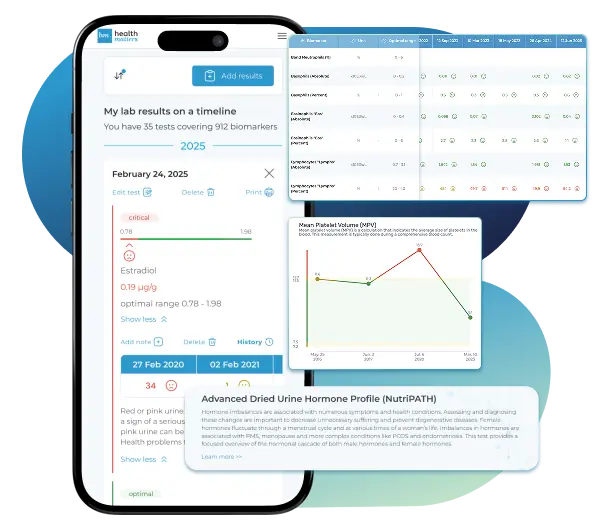
Import lab results from multiple providers, track changes over time, customize your reference ranges, and get clear explanations for each result. Everything is stored securely, exportable in one organized file, and shareable with your doctor—or anyone you choose.
Cancel or upgrade anytime
Article Review & Sources
All our content is backed by peer-reviewed studies, academic research, and trusted medical sources. We're committed to accuracy and transparency — see our editorial policy for details.
Laboratories
Bring All Your Lab Results Together — In One Place
We accept reports from any lab, so you can easily collect and organize all your health information in one secure spot.











Pricing Table
Gather Your Lab History — and Finally Make Sense of It
Finally, Your Lab Results Organized and Clear

Personal plans

$79/ year
Advanced Plan
Access your lab reports, explanations, and tracking tools.
- Import lab results from any provider
- Track all results with visual tools
- Customize your reference ranges
- Export your full lab history anytime
- Share results securely with anyone
- Receive 5 reports entered for you
- Cancel or upgrade anytime
$250/ once
Unlimited Account
Pay once, access everything—no monthly fees, no limits.
- Import lab results from any provider
- Track all results with visual tools
- Customize your reference ranges
- Export your full lab history anytime
- Share results securely with anyone
- Receive 10 reports entered for you
- No subscriptions. No extra fees.
$45/ month
Pro Monthly
Designed for professionals managing their clients' lab reports
- Import lab results from any provider
- Track lab results for multiple clients
- Customize reference ranges per client
- Export lab histories and reports
- Begin with first report entered by us
- Cancel or upgrade anytime
About membership
What's included in a Healthmatters membership
 Import Lab Results from Any Source
 See Your Health Timeline
 Understand What Your Results Mean

 Visualize Your Results

 Data Entry Service for Your Reports
 Securely Share With Anyone You Trust
Let Your Lab Results Tell the Full Story
Once your results are in one place, see the bigger picture — track trends over time, compare data side by side, export your full history, and share securely with anyone you trust.




Bring all your results together to compare, track progress, export your history, and share securely.
What Healthmatters Members Are Saying

I have been using Healthmatters.io since 2021. I travel all over the world and use different doctors and health facilities. This site has allowed me to consolidate all my various test results over 14 years in one place. And every doctor that I show this to has been impressed. Because with any health professional I talk to, I can pull up historical results in seconds. It is invaluable. Even going back to the same doctor, they usually do not have the historical results from their facility in a graph format. That has been very helpful.
Anthony
Unlimited Plan Member since 2021
What fantastic service and great, easy-to-follow layouts! I love your website; it makes it so helpful to see patterns in my health data. It's truly a pleasure to use. I only wish the NHS was as organized and quick as Healthmatters.io. You've set a new standard for health tracking!
Karin
Advanced Plan Member since 2020
As a PRO member and medical practitioner, Healthmatters.io has been an invaluable tool for tracking my clients' data. The layout is intuitive, making it easy to monitor trends and spot patterns over time. The ability to customize reports and charts helps me present information clearly to my clients, improving communication and outcomes. It's streamlined my workflow, saving me time and providing insights at a glance. Highly recommended for any practitioner looking for a comprehensive and user-friendly solution to track patient labs!
Paul
Healthmatters Pro Member since 2024

We implement proven measures to keep your data safe.
At HealthMatters, we're committed to maintaining the security and confidentiality of your personal information. We've put industry-leading security standards in place to help protect against the loss, misuse, or alteration of the information under our control. We use procedural, physical, and electronic security methods designed to prevent unauthorized people from getting access to this information. Our internal code of conduct adds additional privacy protection. All data is backed up multiple times a day and encrypted using SSL certificates. See our Privacy Policy for more details.