
5a-Pregnanediol (Pre-menopausal)
 Optimal Result:
50 - 505 ng/mg Creat/Day.
Optimal Result:
50 - 505 ng/mg Creat/Day.

What is 5α-Pregnanediol?
5α-Pregnanediol is a urinary metabolite of progesterone formed primarily through the 5α-reductase pathway. After ovulation, the corpus luteum produces progesterone. Some of that progesterone is converted to 5α-dihydroprogesterone and the calming neurosteroid allopregnanolone, and then further reduced and conjugated for excretion as 5α-pregnanediol in urine.
On a HUMAP, 5α-pregnanediol helps you understand both overall progesterone output and whether your body favors the 5α-reductase route of progesterone metabolism.
In short: it’s a window into your luteal-phase progesterone status and your 5α-reductase activity.
Why it matters in pre-menopausal women
-
Cycle health & ovulation: Adequate mid- to late-luteal progesterone supports a healthy cycle, implantation potential, sleep quality, and mood stability.
-
Neurosteroid balance: The 5α-pathway yields allopregnanolone, which can have calming, sleep-supportive effects. Too little may correlate with PMS/PMDD-type symptoms in some individuals.
-
Metabolic patterning: A “5α-dominant” pattern is often discussed in the context of steroid metabolism (more commonly with androgens), but it also applies to progesterone and can influence how you feel during the luteal phase.
How to read this marker on a HUMAP
HUMAP normalizes urinary steroid metabolites (often to creatinine). Because progesterone production varies across the cycle, interpretation depends on collection timing:
-
Best window: Mid-luteal (typically ~5–7 days after ovulation).
-
If collected outside the luteal phase: Results may look “low” even if ovulation and luteal function are normal. Always consider cycle day.
If 5α-Pregnanediol is elevated
What it can suggest
-
Strong luteal progesterone production (e.g., robust corpus luteum output).
-
Relative 5α-reductase pathway dominance of progesterone metabolism.
-
Exogenous progesterone use (oral, transdermal, vaginal) or HRT/fertility support can raise downstream urinary metabolites.
-
Pregnancy (progesterone rises early and substantially).
-
Less commonly, shifts in liver/phase II conjugation that favor this excretion pathway.
Possible clues you might notice
-
Good sleep or a calmer mood in the luteal phase (consistent with higher allopregnanolone for some people).
-
If markedly high with symptoms (breast tenderness, bloating, somnolence), consider exogenous hormone exposure or timing (very late luteal).
Next steps to consider
-
Confirm context: Was the sample mid-luteal? Are you using progesterone, combined OCPs, or fertility meds?
-
Cross-check with other HUMAP markers:
-
Total progesterone metabolites (5α- and 5β-pregnanediol together).
-
5α- vs 5β-balance across steroids (does a 5α-tilt show up for androgens, too?).
-
-
Clinical tests when appropriate: Serum mid-luteal progesterone or a pregnancy test if timing/symptoms suggest it.
-
If symptomatic: Discuss dose/formulation/timing with your clinician if you’re on progesterone or HRT.
If 5α-Pregnanediol is decreased
What it can suggest
-
Low luteal progesterone output (e.g., anovulatory cycle, short luteal phase, or suboptimal corpus luteum function).
-
Collection outside the luteal phase (follicular/early cycle).
-
Lower 5α-reductase activity specifically (you might still see some 5β-pregnanediol).
-
Over-dilution (very high fluid intake) can artifactually lower creatinine-normalized values; labs typically correct for this but extreme hydration can still blur interpretation.
Symptoms often discussed when luteal progesterone is low
-
PMS/PMDD-type mood shifts, sleep disturbance, breast tenderness variability.
-
Short cycles, spotting before menses, or difficulty with conception related to luteal support.
Next steps to consider
-
Verify timing: Was this truly mid-luteal (about 5–7 days after ovulation)?
-
Track ovulation: Use LH testing, basal body temperature, or fertility tracking apps to anchor sampling day next cycle.
-
Cross-check on HUMAP:
-
Look at total progesterone metabolites (5α + 5β).
-
Review androgen 5α-indicators (e.g., etiocholanolone/androsterone patterns) to see your global 5α/5β tendency.
-
-
Clinician testing: Consider serum mid-luteal progesterone confirmation.
-
Foundational factors:
-
Thyroid health, iron status, and prolactin can influence ovulation quality.
-
Energy availability (adequate calories), protein, and healthy fats support steroid hormone synthesis.
-
Micronutrients: vitamin B6, magnesium, vitamin C, and zinc are commonly discussed for luteal support.
-
Stress/sleep: chronic stress can alter ovulation and luteal adequacy.
-
What drives the 5α-pathway?
-
Enzyme: 5α-reductase converts progesterone to 5α-dihydroprogesterone (and does the same with androgens).
-
Influencers: Genetics, insulin signaling, androgen milieu, local tissue factors, and some medications can tilt 5α activity up or down.
-
Medications: 5α-reductase inhibitors (e.g., finasteride, dutasteride) can reduce 5α-pathway products. Exogenous progesterone increases downstream metabolites, including 5α-pregnanediol.
Collection & interpretation tips
-
Time it right: Aim for mid-luteal (≈ day 19–23 in a 28-day cycle, or ~5–7 days after documented ovulation).
-
Record cycle day and any hormones/meds on the requisition—vital for interpretation.
-
Hydration: Follow lab instructions; avoid extreme fluid intake before collection.
-
Look at the whole picture: Always interpret 5α-pregnanediol alongside 5β-pregnanediol, total progesterone metabolites, and other sex-steroid pathways.
Practical, patient-friendly action plan
-
Anchor to ovulation: Use LH strips or a wearable to identify ovulation, then plan HUMAP collection mid-luteal next cycle if timing was uncertain.
-
Discuss with your clinician if results don’t match symptoms—consider serum mid-luteal progesterone for confirmation.
-
Support ovulation quality:
-
Prioritize nutrition (adequate calories, protein, and fats), sleep, and stress management.
-
Address under-recovery from intense training if cycles are irregular.
-
Investigate thyroid, iron, and prolactin when cycles or symptoms suggest a problem.
-
-
Medication/hormone review: If you’re on progesterone, OCPs, or fertility meds, bring those details to your interpretation—these can significantly shift metabolite results.
-
Symptom tracking: Pair your lab report with a cycle-tracking journal to see how changes in sleep, mood, cramps, spotting, or breast tenderness relate to hormone patterns over time.
Key takeaways
-
5α-Pregnanediol reflects luteal progesterone output and 5α-reductase metabolism.
-
Elevated values often indicate robust luteal production, 5α-dominance, pregnancy, or exogenous progesterone exposure.
-
Decreased values may reflect low luteal progesterone, off-timing collection, or lower 5α activity.
-
Best interpretation comes from cycle-aware sampling and viewing this marker with companion metabolites and your clinical picture.
Lab Results Explained and Tracked
What does it mean if your 5a-Pregnanediol (Pre-menopausal) result is too high?
An elevated 5α-pregnanediol suggests strong luteal progesterone output and/or a shift toward the 5α-reductase pathway of progesterone metabolism. In practical terms, your body may be producing plenty of progesterone after ovulation, and more of it is being processed along the 5α route (which also generates the calming neurosteroid allopregnanolone).
Common reasons for elevation
-
Mid-luteal robustness: A healthy, active corpus luteum producing ample progesterone.
-
5α-dominant metabolism: Your enzymes favor the 5α pathway (sometimes seen elsewhere with androgens too).
-
Exogenous progesterone/hormones: Prescription progesterone (oral, transdermal, vaginal), luteal support in fertility treatment, or certain HRT formulations.
-
Pregnancy: Progesterone rises substantially early in pregnancy.
-
Timing & physiology: Late-luteal collection or individual differences in liver/phase-II conjugation.
How you might feel
Some people report calmer mood and better sleep mid-luteal when this pathway is active. If values are very high, you could also notice classic high-progesterone symptoms (e.g., breast tenderness, bloating, sleepiness).
Before you read too much into it
-
Confirm collection timing: Best is 5–7 days after ovulation; outside this window, results can look higher or lower than expected.
-
Account for medications: Note any progesterone, OCPs, or fertility meds—they meaningfully raise downstream metabolites.
-
Check companion markers: Review total progesterone metabolites (5α + 5β) and compare with 5β-pregnanediol to understand overall production vs. pathway preference.
Smart next steps
-
Verify mid-luteal timing using LH testing, basal body temperature, or a tracker; repeat in the correct window if timing was uncertain.
-
Discuss meds and dosing with your clinician if you use progesterone or HRT and results don’t match how you feel.
-
Rule out pregnancy when applicable.
-
Cross-check clinically if needed: a serum mid-luteal progesterone can corroborate urinary findings.
-
Track symptoms across cycles: Sleep, mood, breast tenderness, spotting, and cycle length help connect numbers to how you feel.
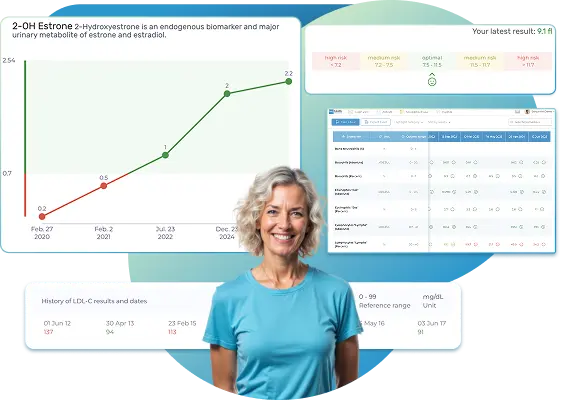
All Your Lab Results.
One Simple Dashboard.
Import, Track, and Share Your Lab Results Easily
Import, Track, and Share Your Lab Results
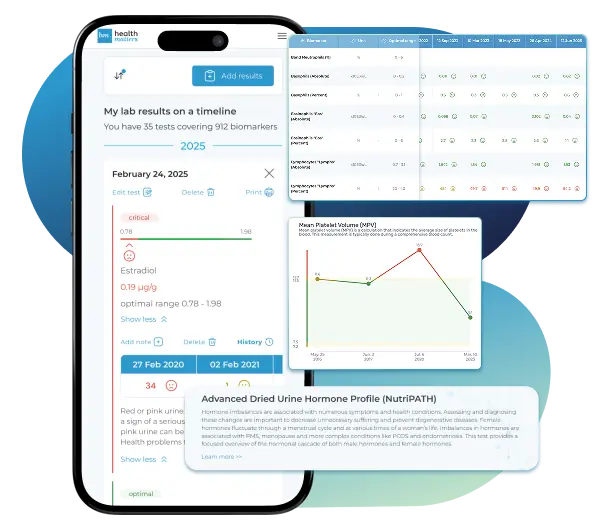
Import lab results from multiple providers, track changes over time, customize your reference ranges, and get clear explanations for each result. Everything is stored securely, exportable in one organized file, and shareable with your doctor—or anyone you choose.
Cancel or upgrade anytime
Article Review & Sources
All our content is backed by peer-reviewed studies, academic research, and trusted medical sources. We're committed to accuracy and transparency — see our editorial policy for details.
Laboratories
Bring All Your Lab Results Together — In One Place
We accept reports from any lab, so you can easily collect and organize all your health information in one secure spot.











Pricing Table
Gather Your Lab History — and Finally Make Sense of It
Finally, Your Lab Results Organized and Clear

Personal plans

$79/ year
Advanced Plan
Access your lab reports, explanations, and tracking tools.
- Import lab results from any provider
- Track all results with visual tools
- Customize your reference ranges
- Export your full lab history anytime
- Share results securely with anyone
- Receive 5 reports entered for you
- Cancel or upgrade anytime
$250/ once
Unlimited Account
Pay once, access everything—no monthly fees, no limits.
- Import lab results from any provider
- Track all results with visual tools
- Customize your reference ranges
- Export your full lab history anytime
- Share results securely with anyone
- Receive 10 reports entered for you
- No subscriptions. No extra fees.
$45/ month
Pro Monthly
Designed for professionals managing their clients' lab reports
- Import lab results from any provider
- Track lab results for multiple clients
- Customize reference ranges per client
- Export lab histories and reports
- Begin with first report entered by us
- Cancel or upgrade anytime
About membership
What's included in a Healthmatters membership
 Import Lab Results from Any Source
 See Your Health Timeline
 Understand What Your Results Mean

 Visualize Your Results

 Data Entry Service for Your Reports
 Securely Share With Anyone You Trust
Let Your Lab Results Tell the Full Story
Once your results are in one place, see the bigger picture — track trends over time, compare data side by side, export your full history, and share securely with anyone you trust.




Bring all your results together to compare, track progress, export your history, and share securely.
What Healthmatters Members Are Saying

I have been using Healthmatters.io since 2021. I travel all over the world and use different doctors and health facilities. This site has allowed me to consolidate all my various test results over 14 years in one place. And every doctor that I show this to has been impressed. Because with any health professional I talk to, I can pull up historical results in seconds. It is invaluable. Even going back to the same doctor, they usually do not have the historical results from their facility in a graph format. That has been very helpful.
Anthony
Unlimited Plan Member since 2021
What fantastic service and great, easy-to-follow layouts! I love your website; it makes it so helpful to see patterns in my health data. It's truly a pleasure to use. I only wish the NHS was as organized and quick as Healthmatters.io. You've set a new standard for health tracking!
Karin
Advanced Plan Member since 2020
As a PRO member and medical practitioner, Healthmatters.io has been an invaluable tool for tracking my clients' data. The layout is intuitive, making it easy to monitor trends and spot patterns over time. The ability to customize reports and charts helps me present information clearly to my clients, improving communication and outcomes. It's streamlined my workflow, saving me time and providing insights at a glance. Highly recommended for any practitioner looking for a comprehensive and user-friendly solution to track patient labs!
Paul
Healthmatters Pro Member since 2024

We implement proven measures to keep your data safe.
At HealthMatters, we're committed to maintaining the security and confidentiality of your personal information. We've put industry-leading security standards in place to help protect against the loss, misuse, or alteration of the information under our control. We use procedural, physical, and electronic security methods designed to prevent unauthorized people from getting access to this information. Our internal code of conduct adds additional privacy protection. All data is backed up multiple times a day and encrypted using SSL certificates. See our Privacy Policy for more details.