
3-Hydroxysebacic
 Optimal Result:
0 - 3 mmol/mol creatinine.
Optimal Result:
0 - 3 mmol/mol creatinine.

3-Hydroxysebacic Acid: Explanation of the Biomarker
3-Hydroxysebacic acid is an organic compound and a specific metabolite of sebacic acid, a dicarboxylic acid involved in fatty acid metabolism. It is typically measured in the context of metabolic and organic acid disorders, particularly as part of acylcarnitine or organic acid testing panels.
Role in Metabolism:
3-Hydroxysebacic acid is a product of the breakdown of long-chain fatty acids, which are key for energy production in the body. Specifically, it is a hydroxy derivative of sebacic acid, formed during the oxidation of certain fatty acids. Sebacic acid itself is important in various metabolic processes, including lipid metabolism, and plays a role in the synthesis of compounds involved in cellular energy.
While 3-Hydroxysebacic acid is not a central metabolite in most common metabolic pathways, its presence in the urine or blood can provide clues about the body’s ability to metabolize certain fatty acids and can be an indicator of metabolic dysfunction.
Clinical Relevance:
The measurement of 3-Hydroxysebacic acid can be particularly useful in diagnosing disorders related to fatty acid oxidation, organic acidemias, and some mitochondrial disorders. Elevated levels of 3-Hydroxysebacic acid in the urine or blood may suggest an underlying issue with how the body is processing fatty acids, leading to metabolic imbalances.
Conditions Associated with Elevated 3-Hydroxysebacic Acid:
-
Fatty Acid Oxidation Disorders:
-
Inherited metabolic disorders that affect the breakdown of fatty acids, such as medium-chain acyl-CoA dehydrogenase deficiency (MCAD) or long-chain fatty acid oxidation defects, may lead to the accumulation of fatty acid metabolites like 3-Hydroxysebacic acid.
-
These conditions impair the body’s ability to convert fats into energy, particularly during periods of fasting or increased energy demand, causing a buildup of metabolites, including 3-Hydroxysebacic acid.
-
-
Organic Acidemias:
-
Organic acidemias, a group of rare inherited metabolic disorders, can lead to the accumulation of abnormal organic acids in the body. 3-Hydroxysebacic acid may be elevated in certain types of organic acidemias, which involve defects in the enzymes responsible for breaking down various metabolites.
-
Disorders such as glutaric aciduria, propionic acidemia, or methylmalonic acidemia can result in elevated levels of several organic acids, including 3-Hydroxysebacic acid.
-
-
Mitochondrial Disorders:
-
Mitochondrial dysfunction, which affects the body’s energy production, can also cause disruptions in fatty acid metabolism. Since the mitochondria are responsible for oxidizing fatty acids for energy, defects in mitochondrial function can lead to the accumulation of metabolites like 3-Hydroxysebacic acid.
-
Clinical Action:
If 3-Hydroxysebacic acid levels are found to be elevated, healthcare providers may investigate underlying causes by:
-
Further Diagnostic Testing: Additional tests, such as genetic testing for metabolic disorders or enzyme activity tests, may be necessary to identify specific defects in metabolic pathways.
-
Clinical Monitoring: A healthcare provider may recommend monitoring the patient’s metabolic status over time, especially in the case of suspected fatty acid oxidation disorders or organic acidemias.
-
Dietary or Medical Interventions: In certain cases, dietary adjustments (e.g., reducing protein or fat intake) or medications may be prescribed to help manage the accumulation of organic acids and improve metabolic function.
Summary:
3-Hydroxysebacic acid is a metabolite linked to fatty acid metabolism, and elevated levels can signal metabolic disruptions, particularly in disorders related to fatty acid oxidation or organic acidemias. While it is not commonly used as a primary diagnostic marker, its measurement can provide valuable insights when assessing metabolic dysfunction, especially in the context of inherited metabolic diseases. If 3-Hydroxysebacic acid levels are elevated, further investigation is needed to determine the cause and guide appropriate treatment.
Lab Results Explained and Tracked
What does it mean if your 3-Hydroxysebacic result is too high?
Elevated 3-Hydroxysebacic Acid: Key Clinical Insights
3-Hydroxysebacic acid is a metabolite produced during the breakdown of sebacic acid, a dicarboxylic acid involved in fatty acid oxidation. While not a primary diagnostic marker, its elevation in blood or urine can indicate disruptions in fatty acid metabolism, mitochondrial function, or organic acid processing. Below is a structured analysis of its clinical relevance.
1. Metabolic Role
3-Hydroxysebacic acid arises from the β-oxidation of long-chain fatty acids, specifically during the metabolism of sebacic acid. This process occurs in mitochondria and peroxisomes, supporting energy production. Its presence reflects:
-
Intermediate steps in fatty acid degradation.
-
Potential bottlenecks in metabolic pathways due to enzyme deficiencies.
2. Clinical Significance
Fatty Acid Oxidation Disorders
-
MCAD Deficiency: Inability to break down medium-chain fats.
Biomarkers: Elevated C8-C10 acylcarnitines. -
Long-Chain Fatty Acid Oxidation Defects: Symptoms include muscle weakness and hypoglycemia.
Biomarkers: Increased long-chain acylcarnitines.
Elevated 3-hydroxysebacic acid often accompanies these disorders, especially during metabolic stress (e.g., fasting).
Organic Acidemias
-
Propionic Acidemia: Accumulation of propionyl-CoA derivatives.
-
Methylmalonic Acidemia: Elevated methylmalonic acid.
-
Glutaric Aciduria Type 1 (GA-1): Associated with glutaric acid and C5DC.
In these disorders, 3-hydroxysebacic acid may rise secondarily due to disrupted mitochondrial function.
Mitochondrial Disorders
-
Defects in oxidative phosphorylation impair fatty acid breakdown, leading to metabolite accumulation. Symptoms may include fatigue, developmental delays, and multisystem dysfunction.
3. Diagnostic Workup
Step 1: Initial Testing
-
Acylcarnitine Profile: Identifies fatty acid oxidation defects.
-
Urinary Organic Acids: Detects abnormal metabolites, such as 3-hydroxysebacic acid.
Step 2: Confirmatory Tests
-
Genetic Testing: Identifies mutations (e.g., ACADM for MCAD).
-
Enzyme Activity Assays: Measures functional deficits in metabolic pathways.
4. Management Strategies
| Condition | Intervention |
|---|---|
| Fatty Acid Oxidation Defects | Avoid fasting, high-carb diet, carnitine supplements |
| Organic Acidemias | Protein restriction, specialized formulas |
| Mitochondrial Disorders | Antioxidants (e.g., CoQ10), symptom management |
Key Takeaways
-
Primary Utility: 3-Hydroxysebacic acid serves as a secondary biomarker for metabolic stress.
-
Differential Diagnosis: Elevations warrant investigation for fatty acid oxidation disorders, organic acidemias, or mitochondrial dysfunction.
-
Actionable Steps: Combine dietary management with metabolic monitoring to prevent crises.

All Your Lab Results.
One Simple Dashboard.
Import, Track, and Share Your Lab Results Easily
Import, Track, and Share Your Lab Results
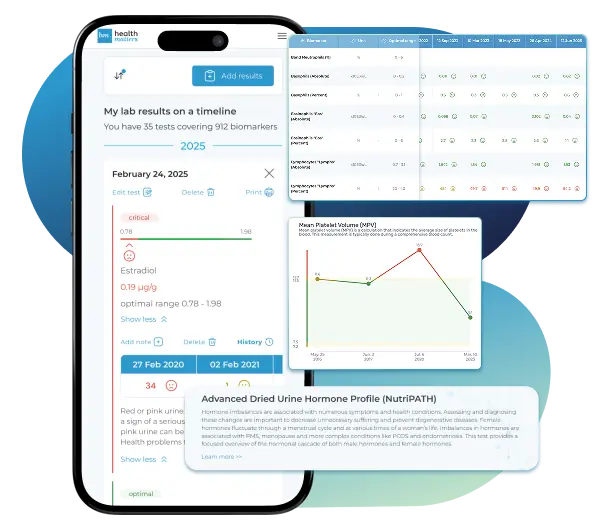
Import lab results from multiple providers, track changes over time, customize your reference ranges, and get clear explanations for each result. Everything is stored securely, exportable in one organized file, and shareable with your doctor—or anyone you choose.
Cancel or upgrade anytime
Article Review & Sources
All our content is backed by peer-reviewed studies, academic research, and trusted medical sources. We're committed to accuracy and transparency — see our editorial policy for details.
Laboratories
Bring All Your Lab Results Together — In One Place
We accept reports from any lab, so you can easily collect and organize all your health information in one secure spot.











Pricing Table
Gather Your Lab History — and Finally Make Sense of It
Finally, Your Lab Results Organized and Clear

Personal plans

$79/ year
Advanced Plan
Access your lab reports, explanations, and tracking tools.
- Import lab results from any provider
- Track all results with visual tools
- Customize your reference ranges
- Export your full lab history anytime
- Share results securely with anyone
- Receive 5 reports entered for you
- Cancel or upgrade anytime
$250/ once
Unlimited Account
Pay once, access everything—no monthly fees, no limits.
- Import lab results from any provider
- Track all results with visual tools
- Customize your reference ranges
- Export your full lab history anytime
- Share results securely with anyone
- Receive 10 reports entered for you
- No subscriptions. No extra fees.
$45/ month
Pro Monthly
Designed for professionals managing their clients' lab reports
- Import lab results from any provider
- Track lab results for multiple clients
- Customize reference ranges per client
- Export lab histories and reports
- Begin with first report entered by us
- Cancel or upgrade anytime
About membership
What's included in a Healthmatters membership
 Import Lab Results from Any Source
 See Your Health Timeline
 Understand What Your Results Mean

 Visualize Your Results

 Data Entry Service for Your Reports
 Securely Share With Anyone You Trust
Let Your Lab Results Tell the Full Story
Once your results are in one place, see the bigger picture — track trends over time, compare data side by side, export your full history, and share securely with anyone you trust.




Bring all your results together to compare, track progress, export your history, and share securely.
What Healthmatters Members Are Saying

I have been using Healthmatters.io since 2021. I travel all over the world and use different doctors and health facilities. This site has allowed me to consolidate all my various test results over 14 years in one place. And every doctor that I show this to has been impressed. Because with any health professional I talk to, I can pull up historical results in seconds. It is invaluable. Even going back to the same doctor, they usually do not have the historical results from their facility in a graph format. That has been very helpful.
Anthony
Unlimited Plan Member since 2021
What fantastic service and great, easy-to-follow layouts! I love your website; it makes it so helpful to see patterns in my health data. It's truly a pleasure to use. I only wish the NHS was as organized and quick as Healthmatters.io. You've set a new standard for health tracking!
Karin
Advanced Plan Member since 2020
As a PRO member and medical practitioner, Healthmatters.io has been an invaluable tool for tracking my clients' data. The layout is intuitive, making it easy to monitor trends and spot patterns over time. The ability to customize reports and charts helps me present information clearly to my clients, improving communication and outcomes. It's streamlined my workflow, saving me time and providing insights at a glance. Highly recommended for any practitioner looking for a comprehensive and user-friendly solution to track patient labs!
Paul
Healthmatters Pro Member since 2024

We implement proven measures to keep your data safe.
At HealthMatters, we're committed to maintaining the security and confidentiality of your personal information. We've put industry-leading security standards in place to help protect against the loss, misuse, or alteration of the information under our control. We use procedural, physical, and electronic security methods designed to prevent unauthorized people from getting access to this information. Our internal code of conduct adds additional privacy protection. All data is backed up multiple times a day and encrypted using SSL certificates. See our Privacy Policy for more details.