21-Hydroxyprogesterone (Pre-menopausal)
 Optimal Result:
0.4 - 5.6 ng/mg Creat/Day.
Optimal Result:
0.4 - 5.6 ng/mg Creat/Day.

21-Hydroxyprogesterone (21-OHP) is a steroid hormone primarily produced by the adrenal glands. It plays a key role in the synthesis of cortisol, an essential hormone for managing stress and regulating metabolism. On the Sex Hormones Profile; Urine (female) panel by Doctor's Data, the 21-Hydroxyprogesterone (Pre-menopausal) marker measures the amount of this hormone in the urine.
In pre-menopausal women, 21-OHP is important for monitoring adrenal function. Abnormal levels, whether elevated or decreased, can provide insights into several health conditions, particularly those related to the adrenal glands. Elevated levels of 21-OHP are often associated with Congenital Adrenal Hyperplasia (CAH), a genetic disorder that results in an enzyme deficiency affecting cortisol production, leading to increased production of androgens and 21-OHP. This condition can lead to symptoms like irregular menstrual cycles, excessive hair growth, or fertility issues.
On the other hand, decreased levels of 21-OHP could indicate adrenal insufficiency or hypofunction, where the adrenal glands are not producing enough of the hormone. This may point to conditions like Addison's disease or other disorders affecting adrenal gland function.
Measuring 21-Hydroxyprogesterone in urine can help provide a more comprehensive understanding of adrenal health, especially when combined with other sex hormones.
Lab Results Explained and Tracked
What does it mean if your 21-Hydroxyprogesterone (Pre-menopausal) result is too high?
An elevated 21-hydroxyprogesterone—also called 11-deoxycorticosterone (DOC)—suggests increased output of an adrenal steroid that sits upstream of aldosterone and has mineralocorticoid effects (it can raise blood pressure and lower potassium when high enough). On a urine Sex Hormones profile (Doctor’s Data), values are typically normalized to creatinine, so always compare your number with your lab’s reference range.
Why it can be high
-
Adrenal enzyme “bottlenecks” (forms of CAH):
-
11β-hydroxylase deficiency (CYP11B1): DOC and 11-deoxycortisol rise; often hypertension + hypokalemia, plus signs of androgen excess.
-
17α-hydroxylase/17,20-lyase deficiency (CYP17A1): DOC can rise; often hypertension, hypokalemia, and low sex-steroid features.
(Note: the common 21-hydroxylase deficiency elevates 17-hydroxyprogesterone, not DOC.)
-
-
Chronic ACTH drive: Cushing’s disease (pituitary ACTH excess) and severe physiologic stress can increase DOC production.
-
Medications: Metyrapone and other 11β-hydroxylase inhibitors raise DOC by design.
-
Metabolic context: Insulin resistance/obesity or type 2 diabetes may shift steroid pathways; interpret persistent elevations with your clinician.
-
Adrenal tumors (rare): Some adrenocortical carcinomas secrete DOC and cause mineralocorticoid hypertension.
Symptoms and clues that “fit” an elevated DOC pattern
-
Blood pressure: New or difficult-to-control hypertension.
-
Electrolytes: Low potassium (muscle weakness, cramps, palpitations).
-
Androgen excess (more with 11β-hydroxylase deficiency): acne, hirsutism, irregular periods.
-
Low sex-steroid features (more with 17α-hydroxylase deficiency): irregular/absent menses, low libido, vaginal dryness, fertility challenges.
How to interpret your value
-
Borderline/slightly high: Can be due to collection issues, hydration, diurnal variation, or meds. Repeat with a properly collected first-morning urine before concluding.
-
Clearly/persistently high: Consider adrenal enzyme defects or hyperplasia—especially if you also have high blood pressure or low potassium.
What to do next (actionable plan)
-
Confirm if borderline: repeat under optimal collection conditions.
-
Discuss focused follow-up with your clinician if elevated persists or symptoms are present:
-
Serum: potassium, renin, aldosterone, cortisol, 11-deoxycortisol, DOC, 17-hydroxyprogesterone.
-
Consider ACTH (cosyntropin) stimulation testing and, when indicated, genetic testing (e.g., CYP11B1, CYP17A1).
-
-
Review medications (e.g., metyrapone) and manage blood pressure/electrolytes promptly.
-
Refer to endocrinology when an enzyme deficiency or adrenal disorder is suspected; treatment may include targeted steroid therapy and mineralocorticoid management.
Related markers to review together
-
Cortisol & metabolites, 11-deoxycortisol, aldosterone/mineralocorticoid activity (if available), DHEA(-S), androstenedione, testosterone, and 17-hydroxyprogesterone. The pattern helps locate where the pathway is blocked or overactive.
Key takeaways
-
Elevated urinary 21-hydroxyprogesterone (DOC) points to increased mineralocorticoid-pathway activity or a downstream block.
-
A single mild rise may be nonspecific; persistent/marked elevation—especially with hypertension/hypokalemia—warrants targeted evaluation.
-
Confirm with repeat and serum testing; involve endocrinology as needed.
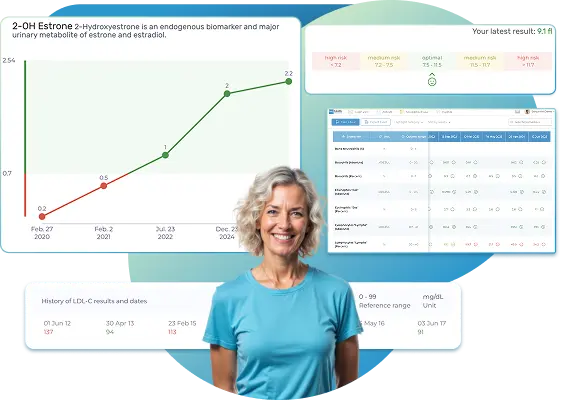
All Your Lab Results.
One Simple Dashboard.
Import, Track, and Share Your Lab Results Easily
Import, Track, and Share Your Lab Results
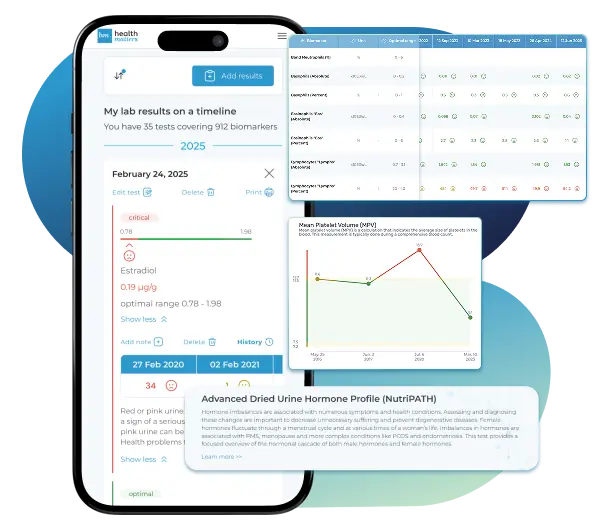
Import lab results from multiple providers, track changes over time, customize your reference ranges, and get clear explanations for each result. Everything is stored securely, exportable in one organized file, and shareable with your doctor—or anyone you choose.
Cancel or upgrade anytime
What does it mean if your 21-Hydroxyprogesterone (Pre-menopausal) result is too low?
Decreased levels of 21-Hydroxyprogesterone (21-OHP) in pre-menopausal women can indicate several potential issues, most of which are related to adrenal function:
-
Adrenal Insufficiency: Low levels of 21-OHP could signal that the adrenal glands are not producing sufficient amounts of hormones, including cortisol. This could be due to conditions such as Addison's disease, where the adrenal glands fail to produce enough hormones overall.
-
Hypopituitarism: This condition occurs when the pituitary gland doesn't produce enough hormones to stimulate the adrenal glands properly. This could lead to reduced production of adrenal hormones, including 21-OHP.
-
Adrenal Fatigue: Although not a formally recognized medical condition, adrenal fatigue refers to the idea that the adrenal glands become depleted or underactive due to chronic stress, leading to insufficient hormone production, including 21-OHP.
-
Congenital Adrenal Hypoplasia: This is a rare condition where the adrenal glands are underdeveloped, resulting in low production of adrenal hormones, including 21-OHP.
When 21-OHP levels are low, it's important to further evaluate adrenal health, especially in the context of symptoms like fatigue, low blood pressure, and salt cravings. A healthcare provider may recommend additional tests, such as cortisol testing or ACTH stimulation tests, to determine the cause and severity of adrenal insufficiency.
Article Review & Sources
All our content is backed by peer-reviewed studies, academic research, and trusted medical sources. We're committed to accuracy and transparency — see our editorial policy for details.
Laboratories
Bring All Your Lab Results Together — In One Place
We accept reports from any lab, so you can easily collect and organize all your health information in one secure spot.











Pricing Table
Gather Your Lab History — and Finally Make Sense of It
Finally, Your Lab Results Organized and Clear

Personal plans

$79/ year
Advanced Plan
Access your lab reports, explanations, and tracking tools.
- Import lab results from any provider
- Track all results with visual tools
- Customize your reference ranges
- Export your full lab history anytime
- Share results securely with anyone
- Receive 5 reports entered for you
- Cancel or upgrade anytime
$250/ once
Unlimited Account
Pay once, access everything—no monthly fees, no limits.
- Import lab results from any provider
- Track all results with visual tools
- Customize your reference ranges
- Export your full lab history anytime
- Share results securely with anyone
- Receive 10 reports entered for you
- No subscriptions. No extra fees.
$45/ month
Pro Monthly
Designed for professionals managing their clients' lab reports
- Import lab results from any provider
- Track lab results for multiple clients
- Customize reference ranges per client
- Export lab histories and reports
- Begin with first report entered by us
- Cancel or upgrade anytime
About membership
What's included in a Healthmatters membership
 Import Lab Results from Any Source
 See Your Health Timeline
 Understand What Your Results Mean

 Visualize Your Results

 Data Entry Service for Your Reports
 Securely Share With Anyone You Trust
Let Your Lab Results Tell the Full Story
Once your results are in one place, see the bigger picture — track trends over time, compare data side by side, export your full history, and share securely with anyone you trust.




Bring all your results together to compare, track progress, export your history, and share securely.
What Healthmatters Members Are Saying

I have been using Healthmatters.io since 2021. I travel all over the world and use different doctors and health facilities. This site has allowed me to consolidate all my various test results over 14 years in one place. And every doctor that I show this to has been impressed. Because with any health professional I talk to, I can pull up historical results in seconds. It is invaluable. Even going back to the same doctor, they usually do not have the historical results from their facility in a graph format. That has been very helpful.
Anthony
Unlimited Plan Member since 2021
What fantastic service and great, easy-to-follow layouts! I love your website; it makes it so helpful to see patterns in my health data. It's truly a pleasure to use. I only wish the NHS was as organized and quick as Healthmatters.io. You've set a new standard for health tracking!
Karin
Advanced Plan Member since 2020
As a PRO member and medical practitioner, Healthmatters.io has been an invaluable tool for tracking my clients' data. The layout is intuitive, making it easy to monitor trends and spot patterns over time. The ability to customize reports and charts helps me present information clearly to my clients, improving communication and outcomes. It's streamlined my workflow, saving me time and providing insights at a glance. Highly recommended for any practitioner looking for a comprehensive and user-friendly solution to track patient labs!
Paul
Healthmatters Pro Member since 2024

We implement proven measures to keep your data safe.
At HealthMatters, we're committed to maintaining the security and confidentiality of your personal information. We've put industry-leading security standards in place to help protect against the loss, misuse, or alteration of the information under our control. We use procedural, physical, and electronic security methods designed to prevent unauthorized people from getting access to this information. Our internal code of conduct adds additional privacy protection. All data is backed up multiple times a day and encrypted using SSL certificates. See our Privacy Policy for more details.